Background:-
A whistlestop tour of French music pre-Berlioz
From the Notre Dame School of Léonin and Pérotin (1160-1250), through the first known setting of the Mass (Guillaume de Machaut, c. 1300-1377) to the Renaissance (e.g. Guillaume Dufay, Josquin dez Prez), composers from what we now know as France and Belgium dominated Western music. Thereafter, their pre-eminence slipped as Italians and Germans started to come to the fore, even then, composers such as Couperin and Rameau kept French music very much alive.
But, by the time the young Berlioz arrived on the scene, the French nation had experienced revolution, regicide and the rise and fall of Napoleon. And Paris, musically, had very little that would bear comparison with the first Viennese School of Haydn, Mozart and Beethoven.
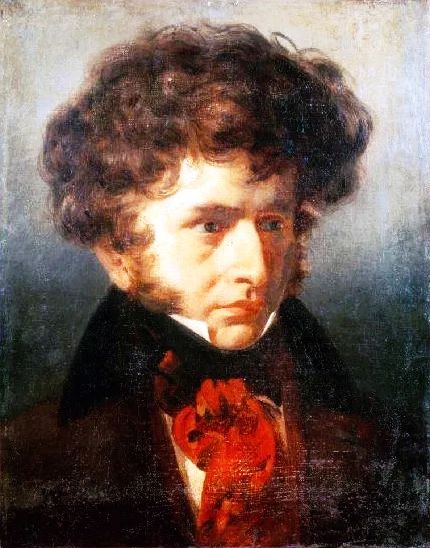
The first major work that brought Berlioz to the attention of the French musical establishment was his Messe solonnelle [Solemn Mass]. Written, at age twenty, in 1824, the young composer had, at first, some difficulty in getting performance of the piece. But, in 1825, at the Parisian church of St. Roche, it was given by a large chorus and professional orchestra to acclaim by the audience, performers and critics. Berlioz, who had borrowed to pay for the performance, was left in debt to the substantial tune of 1280 francs.
The composer eventually became dissatisfied with the Mass and, apart from the Et Resurrexit which he rewrote, destroyed the score. However, in 1991, a copy of the work was discovered in a dusty organ loft in Antwerp: it received its first recorded performance in 1993.
Et Resurrexit 32:00
Any copyrighted material on these pages is included as “fair use”, for the purpose of study, and critical analysis only, and will be removed at the request of the copyright owner(s).
 The Art of Listening