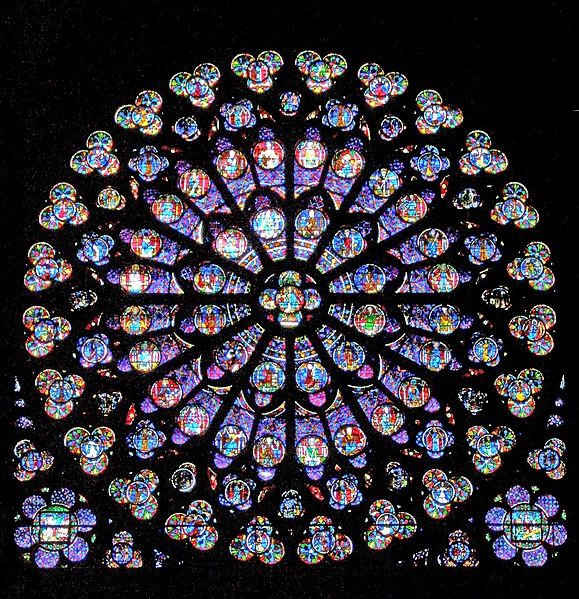
To have described a time of brilliant human creativity and thought as The Dark Ages seems, now, rather perverse. The more detail we’ve unearthed concerning the Middle Ages, the more that supposed darkness recedes and is replaced by the light of human invention.
Take Notre Dame de Paris, for instance; as well as its astonishing architecture and amazing rose windows (above), the cathedral gave its name to a school of composers that produced the first written evidence of the use of two and four part music for the human voice – in other words, harmony.
Why western music has developed the sense of harmony that it has, is something of a mystery, a mystery that’s well worth exploring.
Viderunt omnes: from monophony to two-part writing, to four-part writing – the birth of harmony and polyphony:
Viderunt omnes fines terrae salutare Dei nostri:
jubilate Deo omnes terra.
Notum fecit Dominus salutare suum:
ante conspectum gentium revelavit iustitiam suam.
(Psalm 98:2-4)
All the ends of the earth have seen the salvation
of our God:
sing joyfully to God, all the earth.
The Lord has made known his salvation:
He has revealed His righteousness
in the sight of the nations.
Léonin (fl. 1150s — d. ? 1201):
Organum Duplum for Christmas Day, Viderunt Omnes
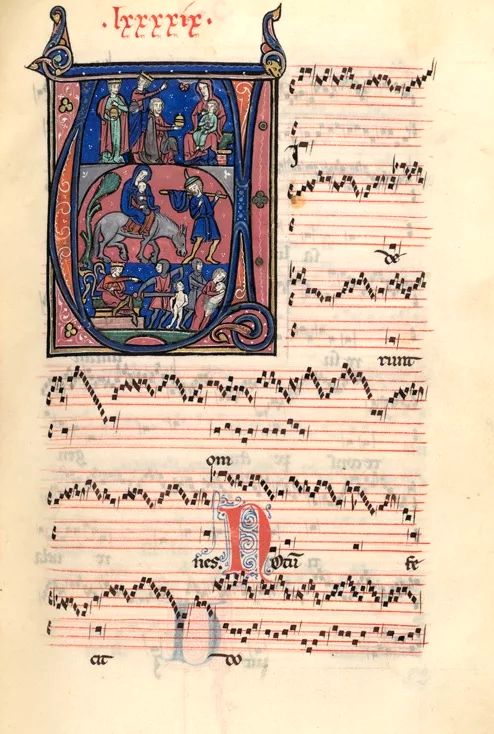
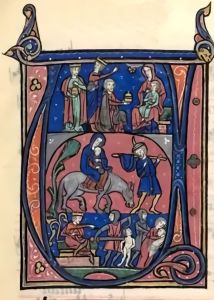
(An enlargement of the above manuscript’s illumination: The Christmas story – the Magi; the flight into Egypt, and the slaughter of the innocents.)
Pérotin (fl. c. 1200):
Organum Quadruplum for
The Feast of the Circumcision (1198?), Viderunt Omnes
Any copyrighted material on these pages is included as “fair use”, for the purpose of study, and critical analysis only, and will be removed at the request of the copyright owner(s).
 The Art of Listening