
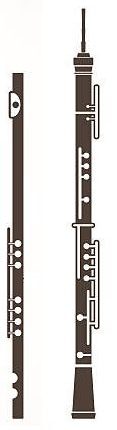
Wind instruments are basically hollow tubes made out of different materials; some tubes are cylindrical (flute & clarinet) and some conical (oboe & bassoon).
At the high end of the woodwind are the flute and oboe.
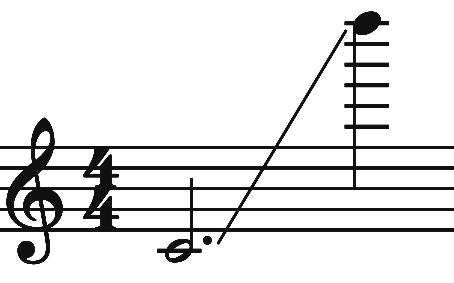
The range of the flute is chromatic from middle C to the D three octaves above (you may need to adjust the volume):
While the range of the oboe is more limited – from the B-flat below middle C to the A two octaves above:
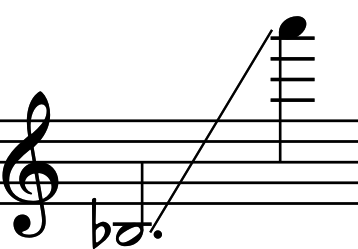
That said, while the bottom notes of all instruments are pretty much fixed (though, in this case, the flute can be fitted with an extension that allows it to play the B immediately below middle C) the extent of the upper range of wind instruments depends very much on the individual player.
A concerto for each instrument:
Mozart: Flute Concerto no. 2
in D major K. 314
This work was a originally written as an oboe concerto (in C), but when the young Mozart received a commission from from a Dutch amateur flautist for three concertos for that instrument, he managed to write the first of them, then hit on the bright idea of adapting his oboe concerto for flute by transposing it up a tone from C to D, thus providing the second; he never did manage to write the third. The flautist, having become aware of this deception, refused to pay the errant composer for the second concerto.
0:00 Allegro aperto
8:32 Andante ma non troppo
15:05 Allegro
In 1945, at the end of the Second World War, when American troops arrived in Richard Strauss’ hometown of Garmisch, corporal John de Lancie, who in civilian life was principal oboe in the Pittsburg orchestra, visited the distinguished composer and, during their conversation, asked whether Strauss had ever considered writing an oboe concerto; the answer was monosyllabic: “No”:
Strauss: Oboe concerto (1945)
00:00 Allegro moderato
08:29 Andante
17:22 Vivace – Allegro
Any copyrighted material on these pages is included as “fair use”, for the purpose of study, and critical analysis only, and will be removed at the request of the copyright owner(s).
Pontarddulais!
 The Art of Listening