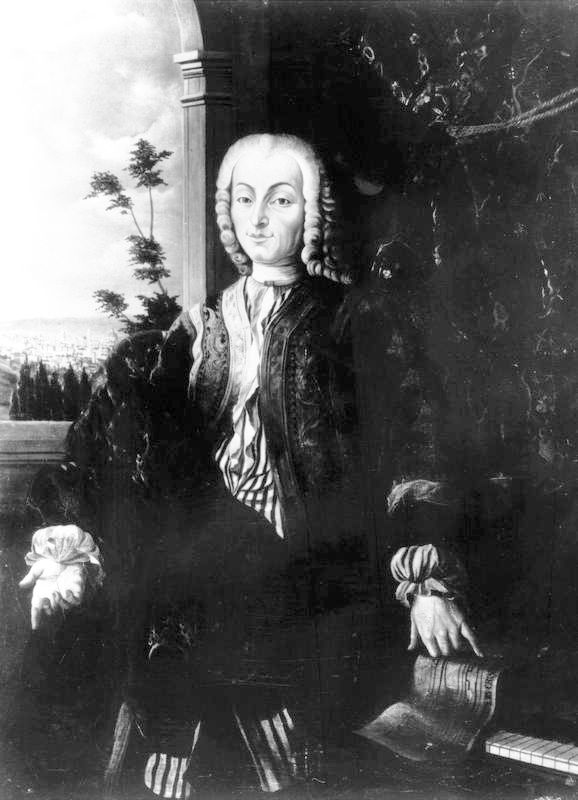
The man deemed responsible for the invention of the piano was Bartolomeo Cristofori (1655-1731), a harpsichord/instrument maker in the service of Ferdinando de Medici. Here’s his c. 1720 version of the instrument:
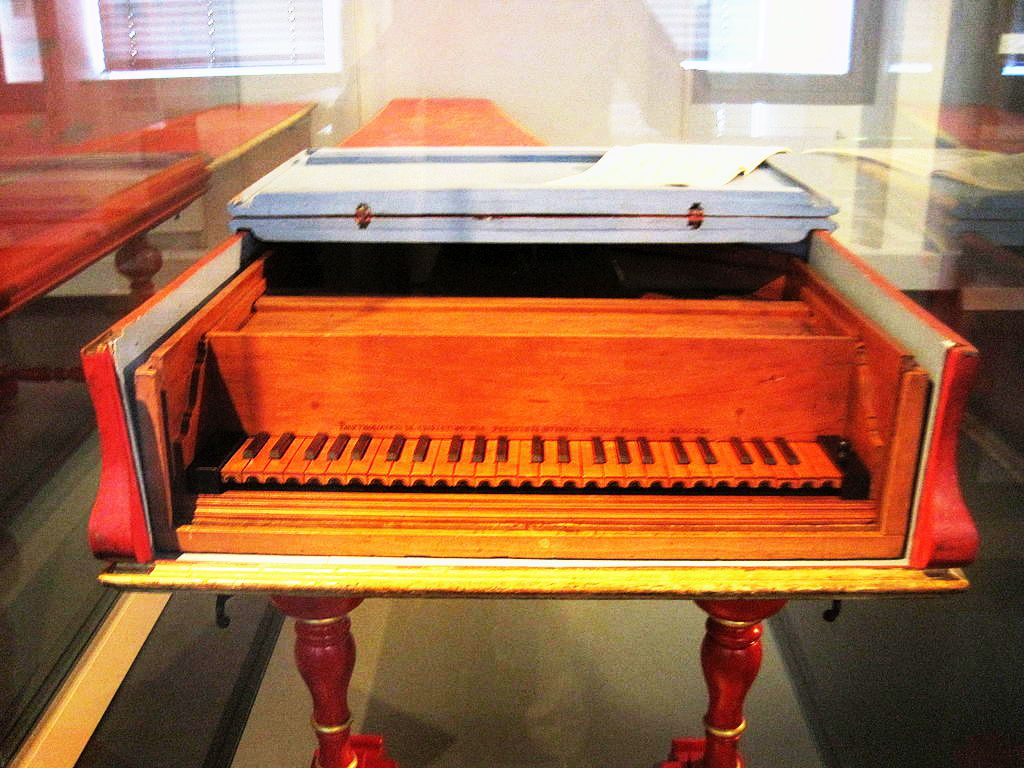
It represents an attempt on the inventor’s part to ameliorate the problems of the clavichord (touch sensitive but too quiet) and harpsichord (loud enough but no touch sensitivity).
In creating an instrument that, like the clavichord, struck the strings; changing the key and hammer mechanism so that the string was allowed to vibrate freely, and placing the results in a harpsichord body, Cristofori managed to combine the virtues of both instruments. You can hear the Metropolitan Museum’s Cristofori piano played below:
And now, a chance to compare the timbre of the clavichord…
…the harpsichord…
…and the Cristofori piano.
The lighter key mechanism and fewer strings per note (mostly two as distinct from the present day piano with three), together with its wooden frame (meaning that the strings, of necessity, are under less tension) makes the instrument seem ‘clearer’ and more fleet of foot than present day pianos. For that reason, they’re frequently distinguished from the contemporary instrument by being called ‘fortepianos’ as distinct from ‘pianofortes’.
Both Mozart and Haydn switched to Cristofori’s new instrument during their lifetimes; here are the results:
The finale of Mozart’s Piano Concerto No. 23 in A, K. 488…
… and Haydn’s late Piano Sonata in C, Hob. XVI: 50:
Any copyrighted material on these pages is included as “fair use”, for the purpose of study, and critical analysis only, and will be removed at the request of the copyright owner(s).
 The Art of Listening