The contrast between last week’s Fidelio and this week’s Barber of Seville is enormous.
Fidelio was first given (in its first version!) in 1805 in the midst of the Napoleonic occupation of Vienna; Rossini’s opera saw the light of day in February 1816, the year that the Buonaparte family was expelled from France; Fidelio is Beethoven’s only opera (he described it as “the shipwreck” and swore never to write another); Rossini, by the time he ‘retired’ (aged thirty-seven!), had written thirty-nine; Beethoven’s work is an inspired melding of opera seria and singspiel; Rossini’s a brilliantly comic opera buffa.
And, subsequently, German and Italian opera went their separate ways for most of the nineteenth century.
Gioachino Rossini (1792-1868):
Il barbiere di Siviglia
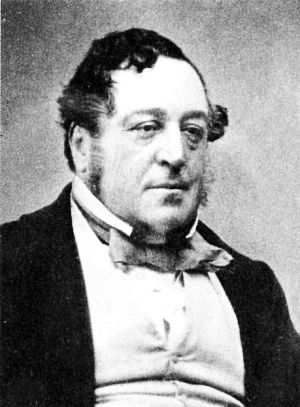
The opera uses the same source material as Mozart’s Marriage of Figaro, i.e. Beaumarchais’ three plays on the subject. But, in using the first of the comedies, Rossini’s opera forms a ‘prequel’ to the Mozart (which deals with the events of Beaumarchais’ second play). It is in two acts.
Here are some of the main arias of Act 1:
Count Almaviva disguised as a poor student (Lindoro) serenades Rosina:
The barber – Figaro – Seville’s Mr-fix-it, presents his CV:
Rosina, having heard ‘Lindoro’s’ serenade, makes her own plans:
Don Basilio, the singing master, explains to Doctor Bartolo (Rosina’s guardian) how he can easily blacken the name of Count Almaviva:
…and Doctor Bartolo combines a sense of his (self) importance with admonishing Rosina:
You can watch the whole opera by clicking on Il Barbiere di Siviglia.
Any copyrighted material on these pages is included as “fair use”, for the purpose of study, and critical analysis only, and will be removed at the request of the copyright owner(s).
 The Art of Listening