
Que non ! par l’immobile et lasse pâmoison
Suffoquant de chaleurs le matin frais s’il lutte,
Ne murmure point d’eau que ne verse ma flûte
Au bosquet arrosé d’accords ; et le seul vent
Hors des deux tuyaux prompt à s’exhaler avant
Qu’il disperse le son dans une pluie aride,
C’est, à l’horizon pas remué d’une ride,
Le visible et serein souffle artificiel
De l’inspiration, qui regagne le ciel.
No! Through the swoon, heavy and motionless
Stifling with heat the fresh morning’s struggles
No water, only that which my flute pours, murmurs
To the grove sprinkled with melodies: and the sole breeze
Out of the twin pipes, quick to breathe
Before it scatters the sound in a dry rain,
Is unstirred by any ripple of the horizon,
The visible breath, artificial and serene,
Of inspiration returning to heights unseen.
Stéphane Mallarmé: from L’après-midi d’un faune
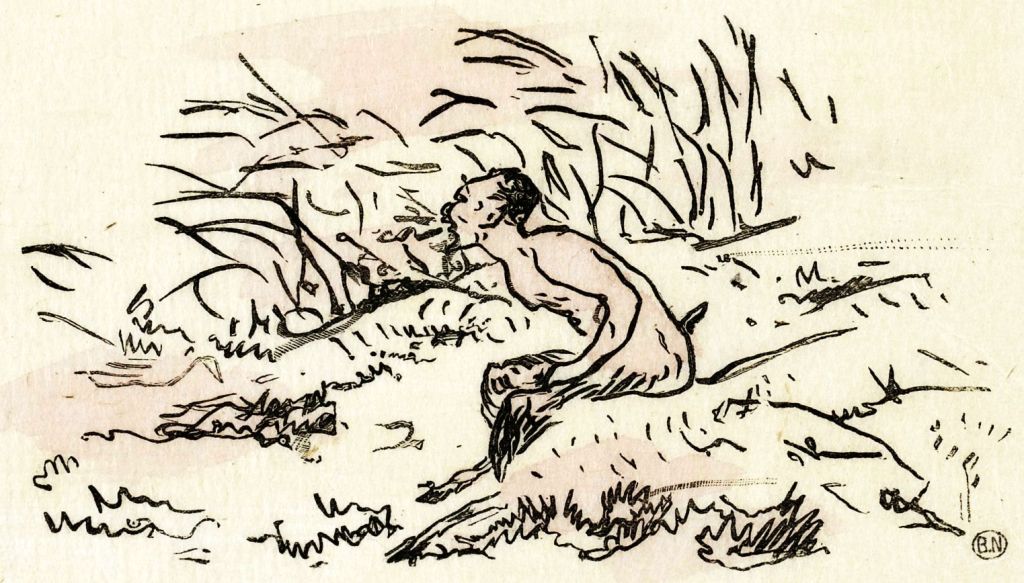
Debussy: L’après-midi d’un faune
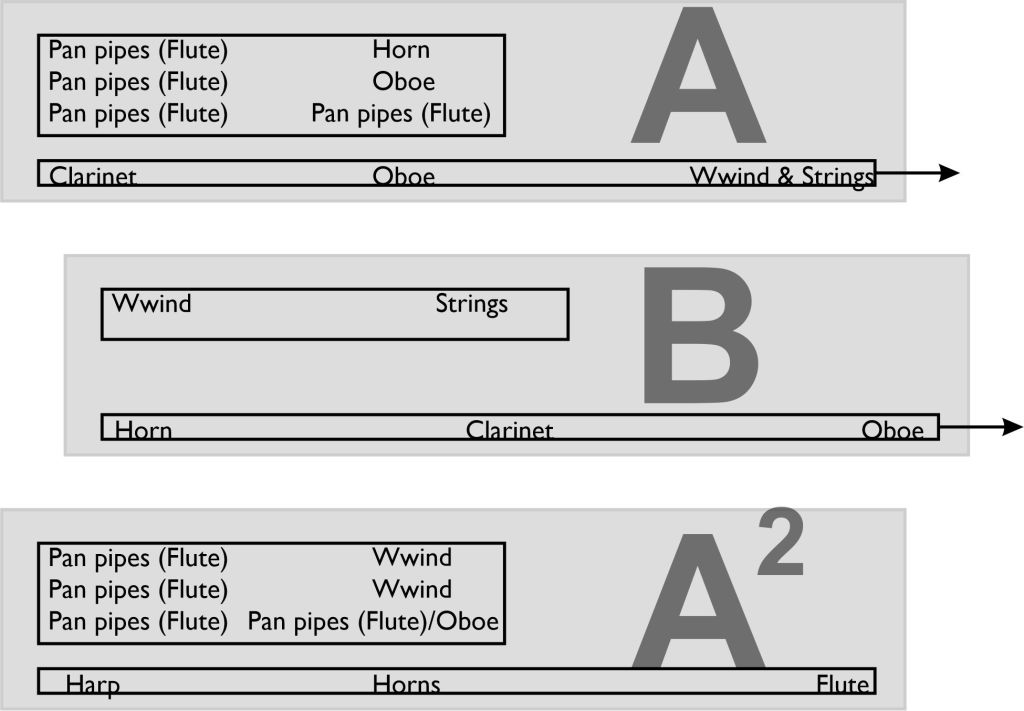
Considered to be one of first major works of musical modernism, a close look at L’après-midi d’un faune:
… its overall shape:
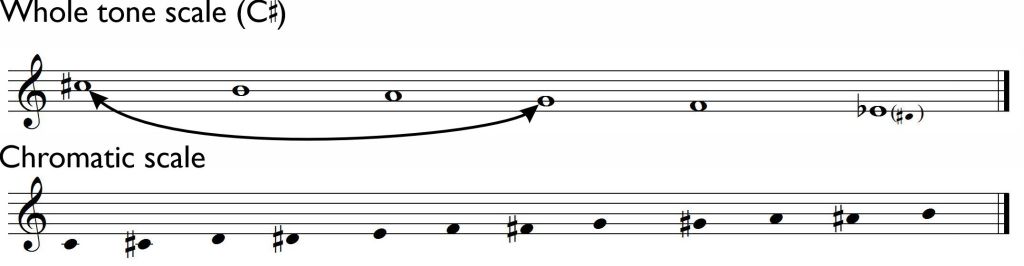
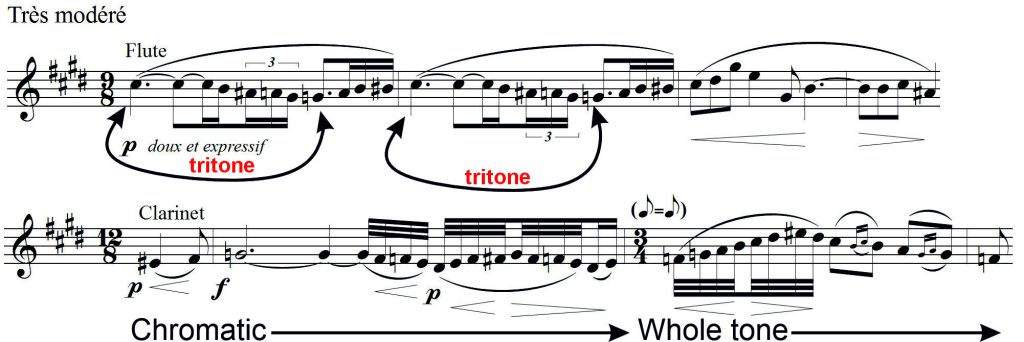
… and its melodic outlines with their tonally ambiguous use of tritones, chromaticism and the whole tone scale:

A second chance to hear Debussy’s Fantaisie pour piano et orchestre. Written in 1890, just prior to starting work on the Prélude à l’après-midi d’un faune, it gives some insights into the evolution of the composer’s unique style:
Debussy: Piano Fantasy
Andante ma non troppo 00:00
Lent (très espressif) 08:39
Allegro molto 17:34
Any copyrighted material on these pages is included as “fair use”, for the purpose of study, and critical analysis only, and will be removed at the request of the copyright owner(s).
Pontarddulais!
 The Art of Listening