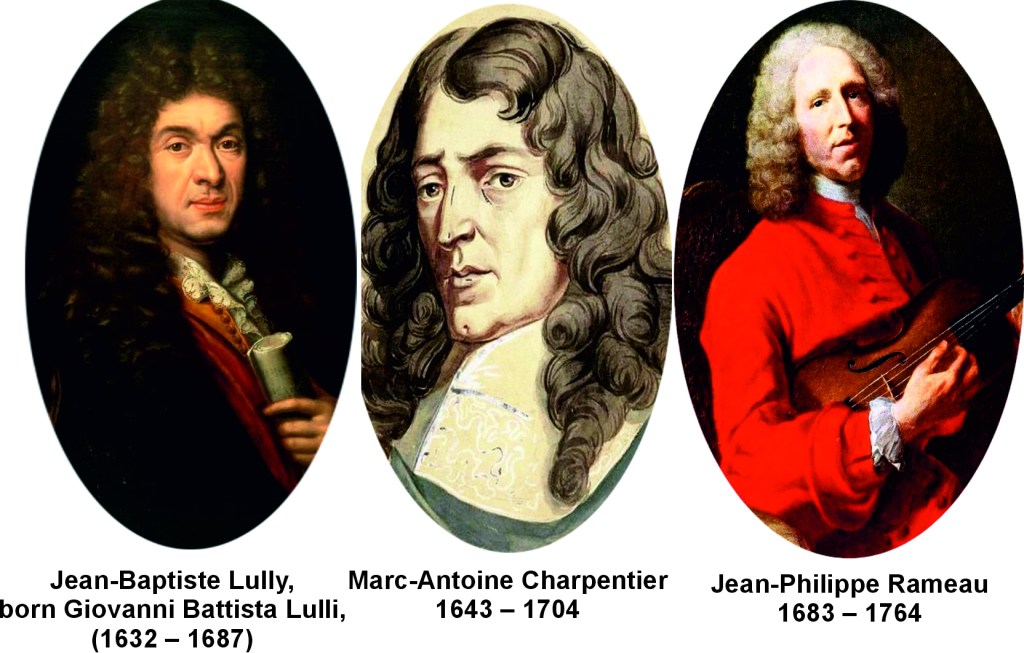
Two Te Deums and a setting of Psalm 126:
This Charpentier Te Deum is one of his six settings of the Latin hymn. It’s famous – or, at least its opening Prélude is – as the theme music of the Eurovision network. It’s thought that the work was written for the celebrations of the French victory at the battle of Steinkirk in 1692.
(00:00) I. Prélude
(01:34) II. Te Deum laudamus
(02:53) III. Te aeternum Patrem
(04:50) IV. Pleni sunt caeli et terra
(07:01) V. Te per orbem terrarum
(10:30) VI. Tu devicto mortis aculeo
(11:22) VII. Judex crederis
(11:59) VIII. Te ergo quaesumus
(14:26) IX. Aeterna fac cum sanctis
(17:05) X. Dignare Domine
(19:19) XI. Fiat misericordia tua
(21:02) XII: In te, Domine, speravi
You may have gathered from the Charpentier above that the Te Deum is associated with public celebration. Here – with no less a glorious personage than Louis XIV, the Sun King himself in attendance (as godfather!) – is the work written by the king’s dancing master, composer and general musical factotum, Lully, to celebrate the baptism of his (Lully’s) son:
1. Symphonie 0:00
2. Patrem immensae majestatis 8:48
3. Tu ad dexteram Dei sedes 16:12
4. Salvum fac populum tuum 21:25
5. Dignare, Domine 26:52
6. In Te, Domine, speravi 32:47
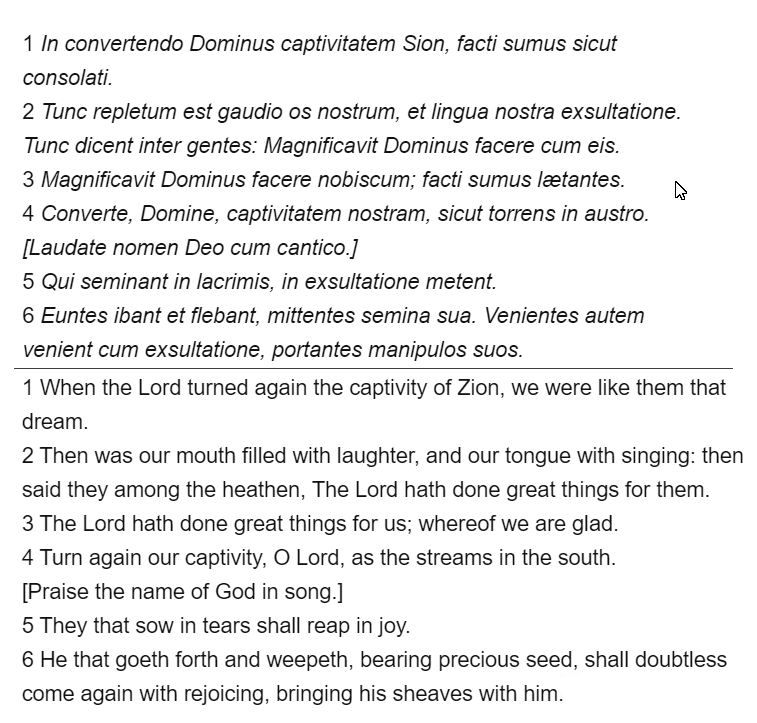
There’s something of a mystery about Rameau’s sacred music. He spent the first forty years of his life – before becoming a famous composer of operas – as a church organist, and yet he seems to have composed nothing for the organ itself and just a few pieces of church music. This motet (one of only four) is a setting of Psalm 126, which expresses the joy of the Israelites at their return from Babylonian captivity.
0:00 In convertendo
2:51 Tunc repletum est gaudio os nostrum
6:02 Magnificavit Dominus
9:24 Converte Domine captivitatem nostram
11:30 Laudate nomen Dei cum canctico
15:44 Qui seminant in lacrimis
18:00 Euntes ibant et flebant
← Back to page 2
← Back to page 1
Any copyrighted material on these pages is included as “fair use”, for the purpose of study, and critical analysis only, and will be removed at the request of the copyright owner(s).
 The Art of Listening