Two scherzos and a love duet are Messiaen’s contribution to this week’s page.
Doundou Tchil? It’s an imitation of the sound of the ankle bracelets worn in Peruvian traditional dance; consequently, the song takes on a dance/scherzo-like character. Piroutcha, she of L’amour de Piroutcha, is Peru’s answer to Ireland’s (and Germany’s) Isolde [Essylt] – the song’s a love duet for one voice.
Turangalîla‘s second Chant d’amour was to be, in the original four movement symphonic plan of the work, the scherzo. Its textures – starting with piccolo and bassoon – are juxtaposed with, and superimposed on an impassioned love theme played by the strings and ondes, giving us a typical Messiaen jam-session (and into which he also throws for good measure a birdsong or two).
Olivier Messiaen:
Harawi
IV. Doundou Tchil
V. L’amour de Piroutcha
Turangalîla-symphonie:
Chant d’amour 2
I. Introduction 0:00:48
II. Chant d’amour 1 0:07:31 ∙
III. Turangalîla 1 0:15:58 ∙
IV. Chant d’amour 2 0:21:30
V. Joie du sang des étoiles 0:32:56
VI. Jardin du sommeil d’amour 0:39:53 ∙
VII. Turangalîla 2 0:52:02
VIII. Développement de l’amour 0:55:45
IX. Turangalîla 3 1:07:25
X. Final 1:12:38 ∙
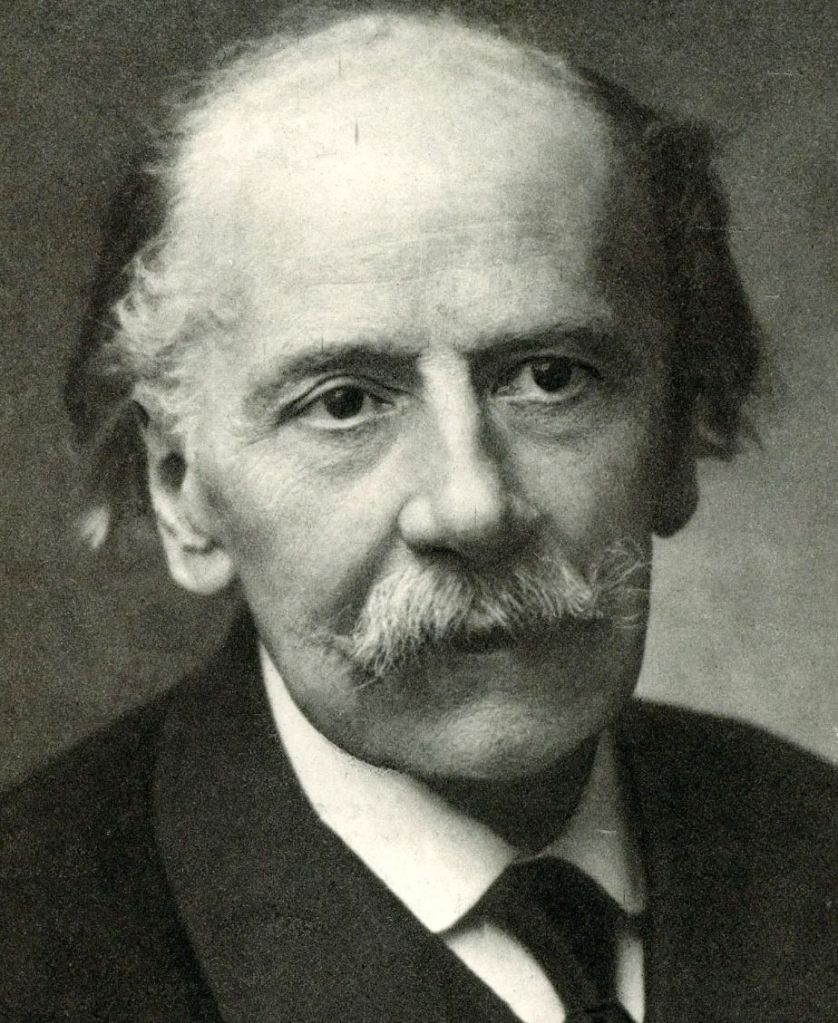
Jules Massenet:
If one were forced to choose a composer to represent the Belle Époque, chances are it would be Jules Massenet (1842-1912). Paris – and therefore France – was in the throes of opera fever and Massenet – with more than thirty of them to his name – obliged the Parisian public with work after work; some of them were failures but many were brilliant successes. Two that have remained in the repertoire are Manon and Werther:
Manon
Des Grieux – Ah! Fuyer, douce image
Werther
Charlotte & Werther – Claire de lune
Werther – Pourquoi me réveiller
Élégie
… and here’s something that’s not from an opera. An early piano work that transformed itself into part of the incidental music to Leconte de Lisle’s retelling of Aeschylus, Les Érinnyes. The melody proved so popular that it then manifested itself in innumerable arrangements (many by the composer himself) – it’s the famous Élégie:
Any copyrighted material on these pages is included as “fair use”, for the purpose of study, and critical analysis only, and will be removed at the request of the copyright owner(s).
 The Art of Listening