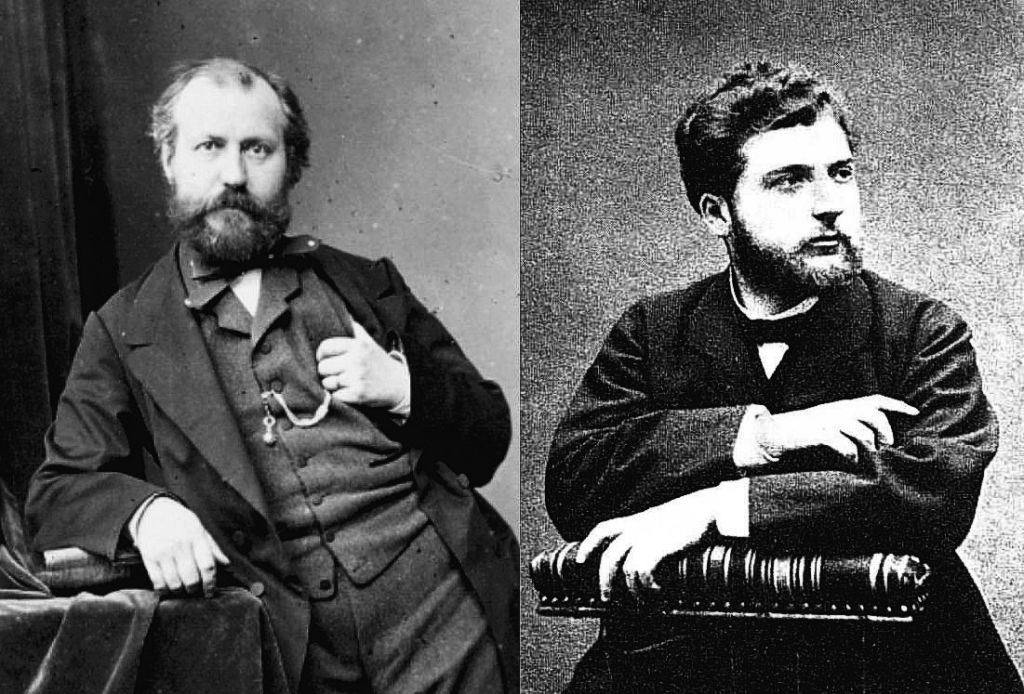
Georges Bizet (1838-1875)
Charles Gounod was fifteen years Berlioz’s junior. Most of his output consists of operas – Faust and Roméo et Juliette are still very much in evidence – and religious works – his Ave Maria (with some help from Bach) and the St. Cecilia Mass are among the best known. However, in 1855, he turned his attention to the symphony, completing two within a year.
I. Allegro molto (0:00)
II. Allegretto moderato (6:06)
III. Scherzo. Non troppo presto (11:07)
IV. Finale. Adagio – Allegro vivace (18:01)
Bizet, a pupil of Gounod, and was so impressed by his teacher’s First Symphony, that – with the supreme confidence of a seventeen year old – he thought he’d write one himself. Bizet’s Symphony in C (unsurprisingly) bears a close resemblance to Gounod’s in D but also demonstrates the young composer’s enormous musical talent.
Having written the piece, Bizet seemingly made no effort to have it performed, put the work away and thought no more about it. It was rediscovered in 1933 and, full of joie de vivre and youthful high spirits, it has since become part of the concert repertoire.
00:00 Allegro vivo
08:06 Andante. Adagio
19:29 Allegro vivace
25:28 Finale. Allegro vivace
And here’s the Georges Prêtre performance:
Any copyrighted material on these pages is included as “fair use”, for the purpose of study, and critical analysis only, and will be removed at the request of the copyright owner(s).
 The Art of Listening