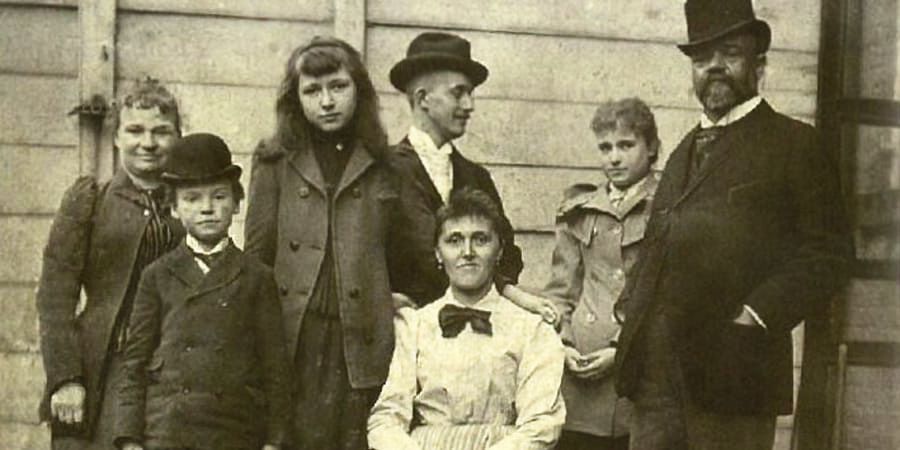
Between 1892 and 1895 Dvořák was resident in the United States where, lured by the promise of an enormous salary, he had taken up the post of Director of the National Conservatory in New York.
As he had with his native Czech traditional music, the composer took an deep interest in the non-European music – African American and Native American – of the fledgling culture, seeing it as the basis of what would eventually become an ‘American Music’ and incorporating their influence into his own music.
Two works to compare his Czech and American styles: the Piano Quintet dates from his return from the States (1897) and features two traditional dance forms (the Dumka and the Furiant) as its slow and scherzo movements.
The String Quintet was written during an idyllic holiday in 1893 that the Dvořák family spent in the Czech colony at Spillville, Iowa; it uses elements of African American spirituals and, in the second movement, the dance rhythms of the Iroquois Indians.
Dvořák: Piano Quintet No. 2, Op. 81
00:04 – Allegro, ma non tanto
14:30 – Dumka: Andante con moto
29:04 – Scherzo (Furiant): molto vivace
33:18 – Finale: Allegro
Dvořák: String Quintet No. 3, Op. 97
0:00 Allegro non tanto
9:48 Allegro vivo — Un poco meno mosso
16:08 Larghetto
26:48 Finale. Allegro giusto
Any copyrighted material on these pages is included as “fair use”, for the purpose of study, and critical analysis only, and will be removed at the request of the copyright owner(s).
Pontarddulais!
 The Art of Listening