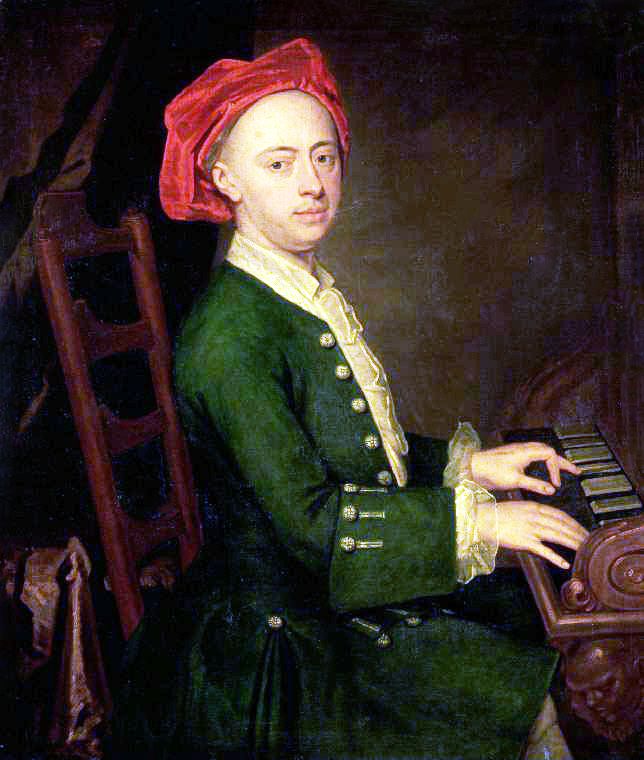
The German Händel turned into the British Handel in 1712 when, after a rather nomadic life style, he finally settled in London and, subsequently, in 1727, became a naturalised British citizen.
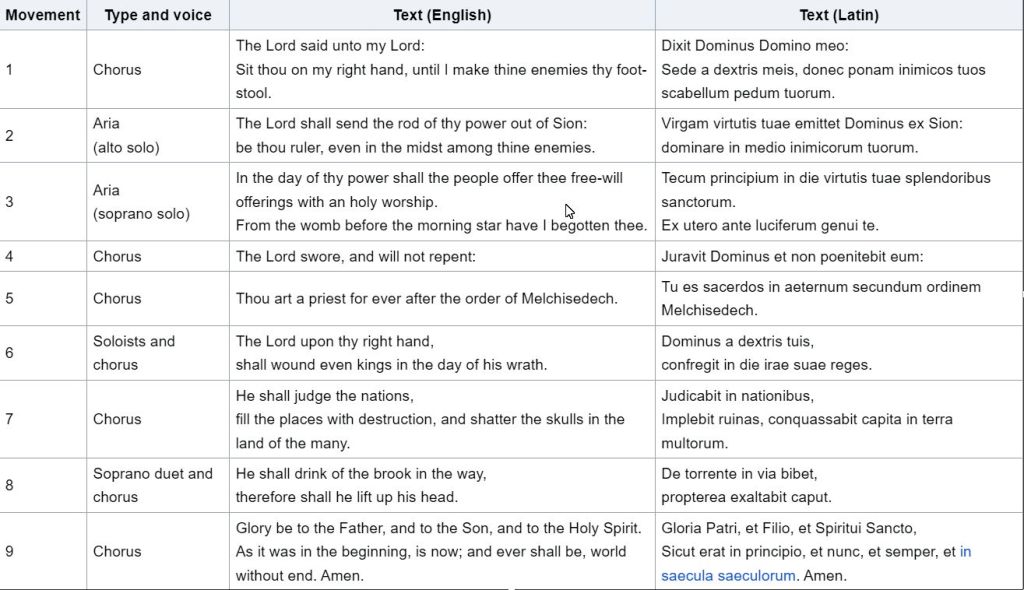
Here’s a chance to compare the continental Händel – as represented by his Dixit Dominus (Psalm 110, 1707), written during a sojourn in Italy – with his British musical alter ego in the form of the first of the eleven anthems written for the Duke of Chandos (c. 1717):
Dixit Dominus 00:00
Virgam virtutis tuae 05:46
Tecum principium in die virtutis 08:48
Juravit Dominus 11:52
Tu es sacerdos in aeternum 14:30
Dominus a dextris tuis 15:58
Judicabit in nationibus 19:02
De torrente in via bibet 22:58
Gloria Patri et Filio 27:17
The anthem is a setting of Psalm 100, known as the "Jubilate".

Tenor solo, then fugal chorus :
Oh be joyful in the Lord, all ye lands,
Serve the Lord with gladness
And come before his presence with a song.

Duet for soprano and bass, with solo violin and solo oboe:
Be sure that the Lord, he is God,
It is He that has made us, and not we ourselves.
We are His people, and the sheep of His pasture.

Polyphonic chorus:
O go your ways into His gates with thanksgiving
And into His courts with praise
Be thankful unto Him, and speak good of His name.

Trio, soprano, tenor and bass:
For the Lord is gracious, His mercy is everlasting
And His truth endures from generation to generation.

Chorus, in block chords:
Glory be to the Father, and to the Son, and to the Holy Ghost

Fugal chorus:
As it was in the beginning, is now, and ever shall be,
World without end,
Amen.
← Back to page 5
← Back to page 4
← Back to page 3
← Back to page 2
← Back to page 1
Any copyrighted material on these pages is included as “fair use”, for the purpose of study, and critical analysis only, and will be removed at the request of the copyright owner(s).
 The Art of Listening