
Mélodies? The mélodie is the Gallic equivalent of the Teutonic lieder, except that the French would insist that it was subtler, and followed the contours of the French language more assiduously than its German cousin follows theirs.
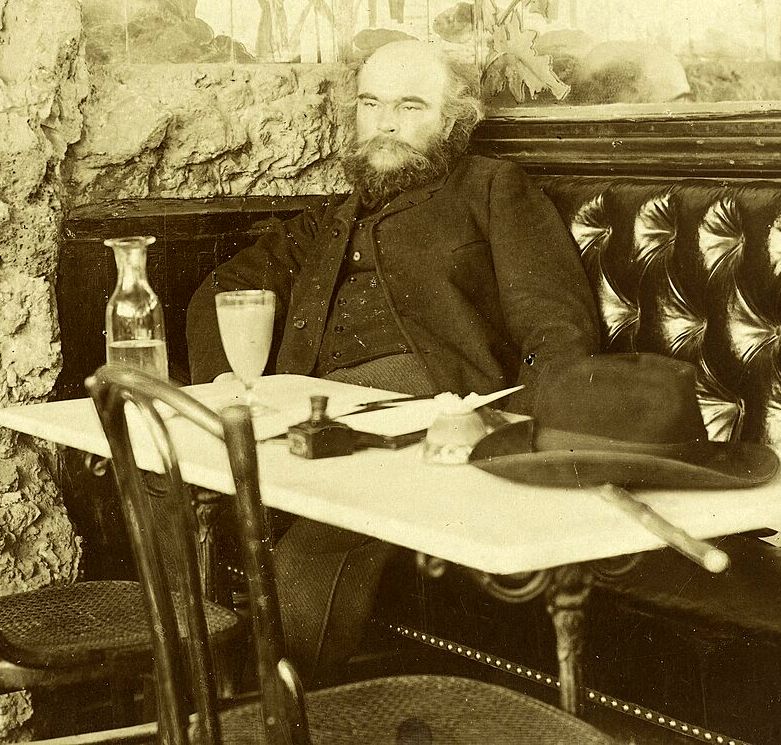
Café François 1er
Debussy was among the many composers to set the poetry of Paul Verlaine. He produced two books of three mélodies each settings of a poetry collection that both author and composer entitled Fêtes galantes. Here’s the first book:

Debussy: Fêtes galantes, book 1
0:00 En sourdine
2:49 Fantoches
4:10 Clair de lune
Debussy had intended to include two other songs (Pantomime and Mandoline) in Book 1, but they were eventually published separately. Mandoline is of interest because when, some time later, Fauré turned his attention once more (see below) to the works of Verlaine, he too, set the poem as the first in his Cinque mélodies de Venise – a golden opportunity for us to compare settings:-
Fauré: Cinque mélodies de Venise, Op. 58
Mandoline [0:05]
En sourdine [1:57]
Green [5:07]
A Clymène [7:02]
C’est l’extase [9:46]
Why de Venise? It’s simply that the composer started the cycle when he was staying in Venice.
Conversely, Fauré had, in 1888, set Verlaine’s Clair de lune, the poem that inspired both Debussy’s famous piano piece and the final song of the above Fêtes galantes, book 1 – again, which do you prefer? (You are, of course, entitled to like both equally!)
Fauré: Clair de lune
Any copyrighted material on these pages is included as “fair use”, for the purpose of study, and critical analysis only, and will be removed at the request of the copyright owner(s).
Pontarddulais!
 The Art of Listening