To (re)jog your memory, we left our exploration of the keyboard aerophones at this point:
The transition from a man in an anorak playing a small positive instrument, (which admittedly has some decoration) to the size and vastly ornate casings of later baroque instruments…
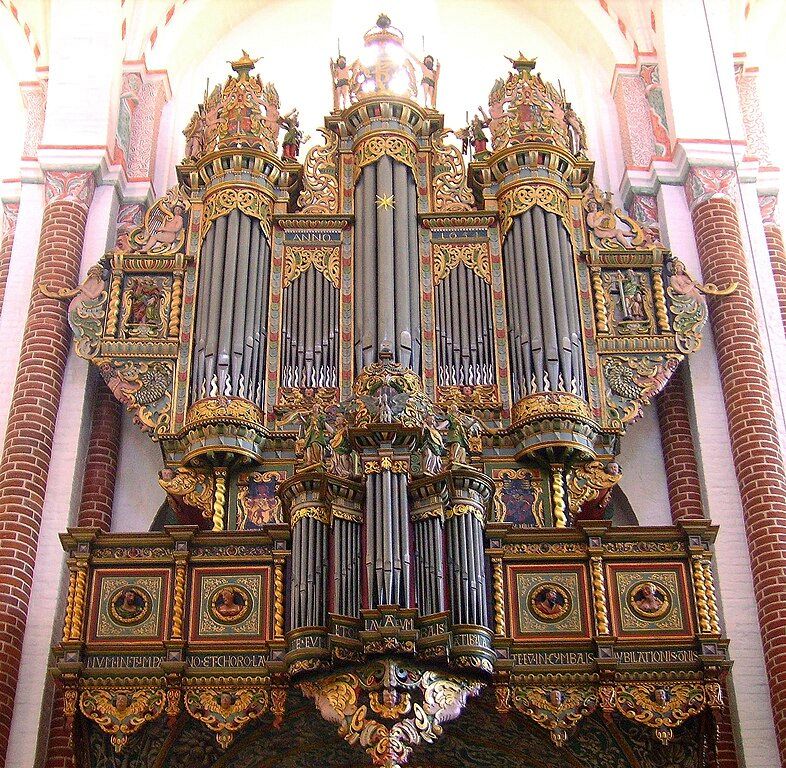
… is quite something. But while appearance certainly changed, the inner workings of the organ remained basically the same: one pipe, one pitch. The sound produced depended on the construction of the individual pipe; like their close relatives, the woodwind instruments, they’re divided into two groups, flues (like the flute or recorder) and reeds (like the oboe, clarinet and bassoon). Pipes that produce similar sounds are grouped together into ‘ranks’ and each rank is activated by pulling out or – modern technology! – pressing a ‘stop’. Stops are sometimes named after the instruments the makers imagine they sound like (e.g. oboe, trumpet) or given more fanciful names (Voix Céleste [heavenly voice] for instance). The choice of stop available varies considerably from organ to organ. You can sample some of the stops/timbres available on the French baroque version of the instrument below:
Playing is a very physical activity (see Charlie Brusquini below), involving split-second synchronisation of both hands and feet. Here, from a extremely distinguished repertoire, are some examples by Bach and Handel :
Handel provides one of the first examples of the concerto for the instrument:
Any copyrighted material on these pages is included as “fair use”, for the purpose of study, and critical analysis only, and will be removed at the request of the copyright owner(s).
 The Art of Listening