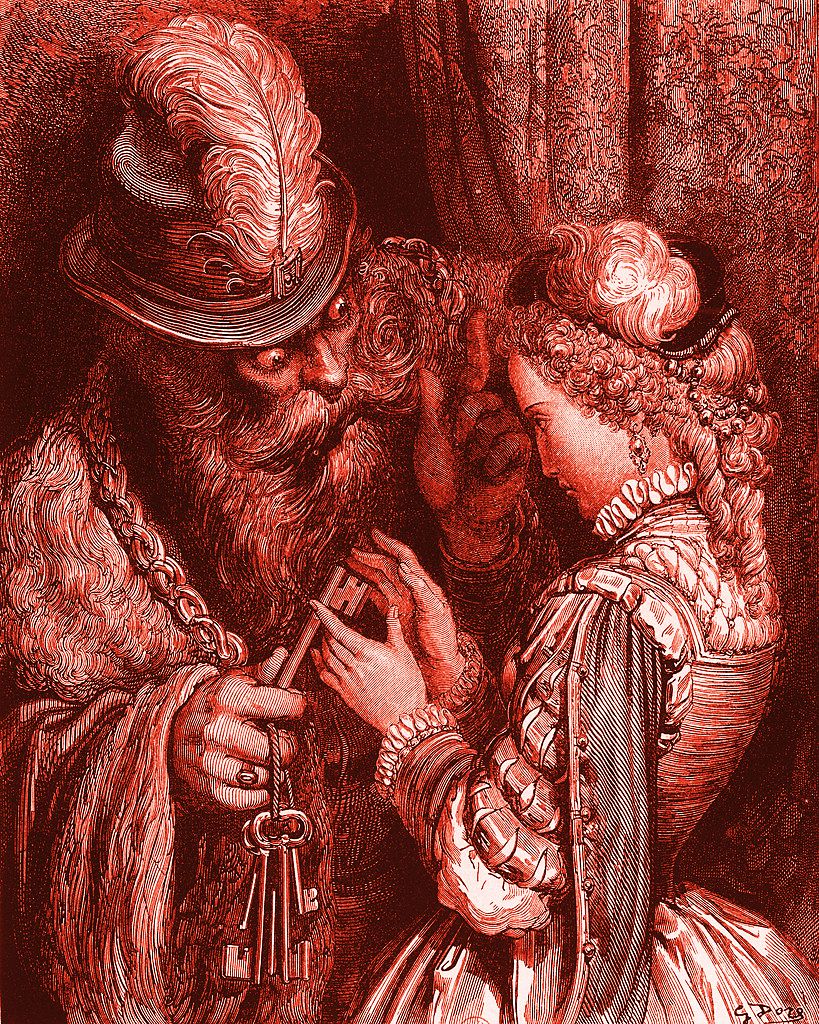
Fairy tales often contain hidden psychological truths; all three of Bartók’s stage works – an opera and two ballets – contain, beneath their narrative surface, an examination of the human psyche.
The opera, entitled A kékszakállú herceg vára [Duke Bluebeard’s Castle], with a libretto based on Charles Perrault’s story by the poet and film critic, Béla Balázs, was written in 1911 (with revisions in 1912 and 1917). It’s a remarkable Symbolist work with a spoken prologue, just two singers, a single stage set (with seven doors), and one act.
Balázs was also responsible for the story-line of the ballet/pantomime A fából faragott királyfi [The Wooden Prince]. and is the only one of the three that features the traditional princesses, fairies and princes.
Bartók’s third theatrical work, another ballet/pantomime, was this time based on a modern, urban tale of thugs, seduction, murder and the supernatural described as a “pantomime grotesque” by its author, the screen writer Melchior Lengyel – it’s entitled A csodálatos mandarin [The Miraculous Mandarin]
1:00 Prologue
2:35 “See this is Bluebeard’s Castle”
6:05 “So this is Bluebeard’s Castle. No windows? No daylight?”
9:41 “Why did you come with me?”
11:54 “I see seven dark doorways”
16:31 1st Door – The Torture Chamber
19:56 “The dark foundations of my castle tremble…”
20:48 2nd Door – The Armory
23:18 ” The dark foundations of my castle tremble…”
24:35 “Why are you waiting? Why not open it?”
24:53 3rd Door – The Treasury
27:13 4th Door – The Garden
32:00 5th Door – The Duke’s Land
36:19 “Look how my castle shines”
37:41 “I will not have any doors closed to me”
38:35 “I will give you just one more key”
39:19 6th Door – The Lake of Tears
43:31 “Come, Judith”
44:05 “I will not open the seventh door.”
48:37 “I know, Bluebeard, what is hidden behind the seventh door.”
52:38 7th Door
55:40 Dawn, Noon and Evening
57:28 Night
59:45 “And now it will always be night.”
… and here are links to the two ballets/pantomimes. A ‘classical dance’ version of The Wooden Prince and a modern take on The Miraculous Mandarin:
Wooden Prince
Miraculous Mandarin
Any copyrighted material on these pages is included as “fair use”, for the purpose of study, and critical analysis only, and will be removed at the request of the copyright owner(s).
 The Art of Listening