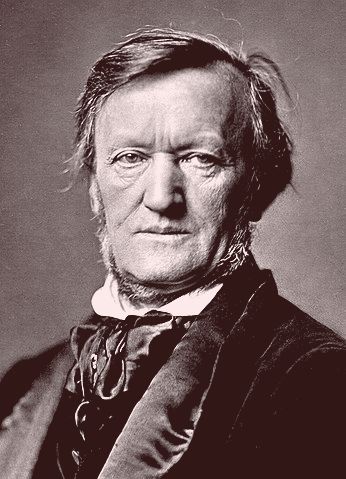
Between them Wagner and his father-in-law, Liszt, pushed harmony – as least in the sense of being grounded in a key – as far as it would go.
Perhaps the most extreme example of this near keylessness occurs in the love music of Wagner’s music-drama Tristan and Isolde. From the very first chord (the ‘Tristan chord’) of the Prelude we’re made aware of the harmonic ambiguity that’s to dominate the music of the lovers:
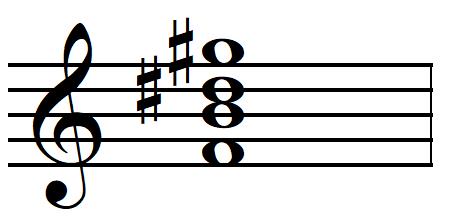
It’s a dissonant chord of longing which only achieves full resolution nearly four hours later in the final chord of the opera, as you can hear in the two clips – the Prelude & Liebestod (Isolde’s final death-vision of the transfigured Tristan) – below:
Any copyrighted material on these pages is included as “fair use”, for the purpose of study, and critical analysis only, and will be removed at the request of the copyright owner(s).
 The Art of Listening