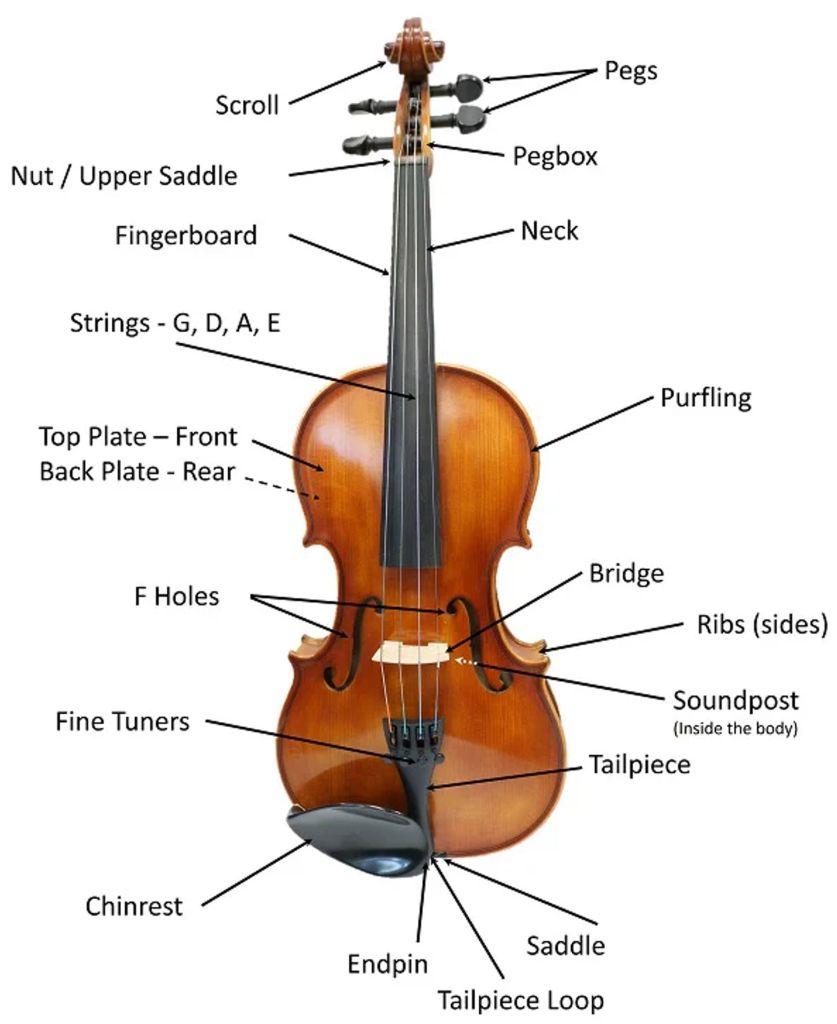
Compared with plucked string instruments, such as the harp, the violin is a mere youngster with the first mentions of it dating from the early sixteenth century.
That notwithstanding, it soon became very popular and, within a century, composers such as Bach were writing both unaccompanied music – here’s the fugue from his First Sonata in g:
– and (two) concertos for the instrument; this is the E major:
I. Allegro 00:00
II. Adagio 07:33
III. Allegro assai 13:09 ∙
Predating the Bach are Heinrich Ignaz Franz Biber’s fifteen Rosary Sonatas, a sequence of works for violin and continuo but which ends with this passacaglia for the unaccompanied instrument:
Biber was mostly based in Salzburg; another, rather later, (sometime) resident of that town called Wolfgang Amadeus Mozart also wrote a number of distinguished works for violin including five concertos, this is the third:
1 | 0:19 Allegro
2 | 9:45 Adagio
3 | 17:48 Rondeau: Allegro
The Beethoven concerto stands at the beginning of the nineteenth century (1806). There followed a series of violin virtuosi who extended the technique of the instrument considerably; the first and most famous of those performer/composers was Niccolò Paganini. This is the final rondo of his First Concerto demonstrating many of the brilliant facets of his playing with which he astonished and delighted his audiences:
Then came a whole plethora of famous nineteenth century concertos – Mendelssohn, Brahms, Tchaikovsky, Bruch; followed in the twentieth century by those of Sibelius, Szymanowski, Berg, Bartók, Prokofiev, Barber, Shostakovitch, etc.
Any copyrighted material on these pages is included as “fair use”, for the purpose of study, and critical analysis only, and will be removed at the request of the copyright owner(s).
 The Art of Listening