
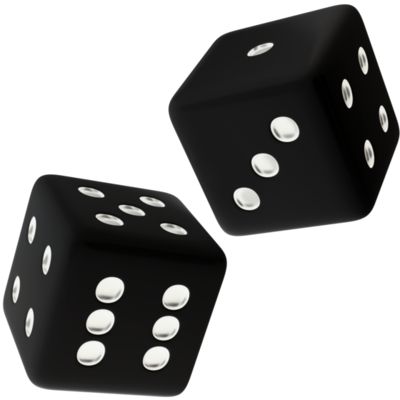
In the mid twentieth century some composers started to use chance of different sorts in their scores, a technique that was classified under the blanket term of ‘aleatoric’ music [alea (Latin) = dice]. Of course, in the performing arts, no matter how pre/proscriptive the composer or author is, there is always a certain amount of wiggle room for the interpreter – think of the number of ways you can say ‘To be or not to be’ – in music this is frequently subsumed under the term ‘rubato’.
However, aleatoric music uses chance/interpretation in a much more significant way. In the later Lutosławski of the Third Symphony and the Cello Concerto this chance element is limited to allowing the players a certain amount of freedom – the pitches and rhythmic outline are both notated, but the speed at which these motifs/melodies are performed is frequently left to the executant.
The Cello Concerto dates from 1970; it was commissioned by the Royal Philharmonic Society and dedicated to Mstislav Rostropovich who gave its first performance.
Lutosławski – Cello Concerto
Introduction – [0:00]
Four Episodes – [5:32]
Cantilena – [12:57]
Finale – [18:13]
Lutosławski – Symphony No. 3
Completed in 1983 and written for the Chicago Symphony Orchestra, Lutosławski’s Third Symphony has been described as one of the finest of the twentieth century’s symphonic essays. The difficulty of writing a sustained musical argument without recourse to a key centre posed a major problem for the century’s would-be symphonists. Lutosławski solves the difficulty through the use of a repeated signal and varied textures and melody – and it works!
Vivo 00:00
Adagio 08:31
Poco meno mosso 15:08
Piú largo – Lento – Allegro 21:58
Any copyrighted material on these pages is included as “fair use”, for the purpose of study, and critical analysis only, and will be removed at the request of the copyright owner(s).
Pantygwydr!
 The Art of Listening